skip to main |
skip to sidebar
By Ward BattyWith Chess and Go, does the world really need more abstract strategy games for two? Clearly the answer is yes, as this has been a popular category of games for centuries. Some of my favorites are part of what is known as Project GIPF by designer Kris Burm and published in North America by Rio Grande Games.Project GIPF is a series of two-player abstract strategy games. They are stand-alone games, but the designer has also created what he calls "potentials" which are optional add-ons that can increase the possibilities and increase the complexities of the games. The games in the series are Gipf, Tamsk, Zertz, Dvonn, Yinsh and Punct. All of these games are interesting and worthwhile, but I'm going to focus on three of my favorites. Zertz is played on a board that is made of washer-like discs. They are arranged into a large hexagon shape. There are 5 white, 7 grey and 9 black marbles available for play. The rules are simple. On your turn, if you can capture a marble, you must. Just like in checkers, marbles can jump over another marble to capture; multiple marbles may be captured if possible, just like checkers. If you can't capture a marble, the turn consists of adding a marble and removing one of the discs that lie along the outside edge of the board. So the board changes as the game progresses. You can capture a group of marbles by removing the disc that isolates them from the rest of the board. The object is to capture 3 white, 4 grey or 5 black marbles, or 2 marbles of each color.The game rarely goes the same way twice because of the deteriorating board, varied winning conditions and the ability to capture multiple pieces in different ways. The rule where you set up your play by forcing your opponent to make a capture is a great one. Zertz is the game I've played the most and it always rewards with a great play experience.
 Dvonn takes an old game mechanic and improves on it. This time the pieces are just flat discs, 23 black, 23 white and 3 that are colored like pepperoni. No one who has seen it has ever disagreed with this description. Players are moving pieces or stacks of pieces in an attempt to end up with stacks with their own color on top. The player whose piece is on top of the stack controls its movement. Stacks may be moved as many spaces as the number of pieces in that stack. Any time a group or stack of pieces become separated from one of the three pepperoni pieces they are removed from the game. The goal is to have control of the most pieces at the end of the game.
 Yinsh has a familiar goal, get five pieces of your color in a row. However, the manner in which this is accomplished is unique. Each turn, a player moves one of the rings they have on the board. Every time a marker is moved the player places a marker in the space the ring originated. These markers are white on one side and black on the other. If you pass the ring over other markers, they are flipped and so the marker color will change. If in doing this player gets five markers in a row of their color, they remove those markers and a ring. The goal is to be the first player to collect three rings. Of course, removing the rings limits the player's available choices, so the game gets trickier as it progresses. The relatively straightforward goal of Yinsh makes it the most accessible game in the series, in my opinion.There's not a bad game in the bunch, but these three are my favorites. The GIPF series is one of the more impressive accomplishments in recent boardgame design. To learn more about these games, visit the GIPF site at http://www.gipf.com/.These games should be available locally at a specialty game shop. Even if the shop doesn't have the game in stock, many are happy to special-order them. Your local store is a great place to learn more about these great games. Online, I'd suggest going to Google, click on Froogle and search for the game by name. Ward Batty is a long-time game-player who has been with the same weekly game group for over twenty years. "I understood there was a pension." is his excuse. He writes a monthly column on the business of board games for Comics & Game Retailer magazine and has written articles and reviews for The Games Journal, Scrye, Knucklebones and Games International.
The Game Table is a weekly column which is self-syndicated by the author. If you would like to see this column in your local newspaper, please write the managing editor of the paper. Interested in carrying The Game Table in your paper, please contact Ward Batty.
 In my introductory column I said this column would cover boardgames and custom card games that don't use the standard 52-card deck. It's taken nine columns, but I'm finally getting to card games. There are as many interesting and unique designer card games being created as board games. So where to start?Let's start with Circus Flohcati because it is a game that works well for very young children through adults. It also says it plays up to five but I've played it with six players many times. The name is a combination of English and German and is about a flea circus. If you don't know what a flea circus is, ask your parents or grandparents if necessary, you won't believe the answer.With Circus Flohcati there are ten suits in different colors numbered 0 to 7, illustrated with ten different names and types of flea circus acts. The first player flips over the top card and takes it if they want. If not, another card is flipped. As long as the suit of the new card is not the same as a card showing, it may be taken by the player or added to the display. Players continue to flip over cards until they take one, or until a card of a suit that is showing is flipped in which case that card is discarded and that player's turn ends with them getting no card.The game ends when someone has collected one card from each suit. That player gets a bonus, but everyone adds up the face value of his or her cards. There are three action cards. Two that let you steal a card from another player and one that allows the player to keep rolling cards until they get a match, discard it and still draw a card.This is a great game for kids and adults. It generally runs ten to fifteen minutes and has lots of replay value. Circus Flohcati is by Reiner Knizia and published by Rio Grande Games.
 San Juan is a card game version of boardgame called Puerto Rico, but works very well on its own whether you have played Puerto Rico or not. This is an innovative game of city building and economics. The cards represent buildings, which are worth victory points and have additional functions. Some cards produce goods, which can be sold for more cards, while others have unique abilities that aid that player.There are five "role" cards (not like in D&D, don't be scared). Each player selects a role such as builder. That player, as the builder, gets a one-card discount on the cost of playing a new building card face up. The other players will also be able to build at the regular price. If a card costs five to build, a player will place that card face up and discard five cards from their hand as payment. Other roles include the chance to use their production buildings to produce, and then later sell that product or draw a new card. Players are constantly trying to acquire more cards so they can build more buildings.The particular abilities of the buildings are important and getting buildings in combinations where the abilities compliment each other, say a building that increases production and another that allows players to trade an extra good, is the key to success. The game is a race to build twelve buildings but all players will add up the value of their buildings to determine a winner. The game usually lasts 20-30 minutes and works well for two, three and four players. San Juan is by Andreas Seyfarth and is published by Rio Grande Games.
 Finally I'll mention another fast and fun card game called No Thanks!. It is a very simple and is fast but has a bit of bite to it. There's a deck of cards numbered 3 to 35. Each player gets eleven chips. The deck is shuffled and nine cards are randomly removed from the game without looking at them. A card is flipped. If a player wants it they take it. If not, they pay a chip. When someone takes a card they get it and all the chips players have paid to avoid it. Chips are worth a point and cards are worth minus the face value in points. However, if you get consecutive numbers, only the smallest numbered card is counted against the player. The fun in the game is making others pay you to take a card that you want, but they can't really afford to take. The game always unfolds nicely, accommodates 3-5 and takes maybe 10 minutes to play. No Thanks! is by Thorsten Gimmler and is published by Z-Man Games.These games should be available locally at a specialty game shop. Even if the shop doesn't have the game in stock, many are happy to special-order them. Your local store is a great place to learn more about these great games. Online, I'd suggest going to Google, click on Froogle and search for the game by name. I promise I won't wait another nine weeks to talk about card games again.Ward Batty is a long-time game-player who has been with the same weekly game group for over twenty years. "I understood there was a pension." is his excuse. He writes a monthly column on the business of board games for Comics & Game Retailer magazine and has written articles and reviews for The Games Journal, Scrye, Knucklebones and Games International.
The Game Table is a weekly column which is self-syndicated by the author. If you would like to see this column in your local newspaper, please write the managing editor of the paper. Interested in carrying The Game Table in your paper, please contact Ward Batty.
By Ward Batty
 I had the pleasure of attending the GTS (GAMA Trade Show) in Las Vegas last week. This is a trade show of game store retailers, distributors and publishers. While most of the games are for what I'd call the hobby-game market such as role-playing games and collectible card games, boardgames are increasing each year and a number of publishers were there with new and upcoming releases. Here are my highlights of upcoming releases.Days of Wonder had the latest release from their successful Ticket to Ride game series by Alan Moon. Ticket to Ride is a railroad connection game, which was followed by Ticket to Ride Europe. They have won fourteen international game awards, including the Spiel des Jahres (Game of the Year) in Germany for Ticket to Ride. Over a half-million copies of the two games have been sold to date.
 The latest game in the series is Ticket to Ride - Märklin Edition. According to Days of Wonder, train hobbyists consider Märklin the premier name in the model train world. This German company has been around for over 140 years and is the world's leader in the miniature train hobby. The board for the Märklin Edition is based on a map of Germany and introduces passengers and merchandise to the Ticket to Ride game play. Ticket to Ride - Märklin Edition will be available in April.
 Atlas Game has a clever road building/earthquake game called Seismic. I had the opportunity to play the game with designer Ted Alspach. Players build roads and score for the length as well as the value of the ends, but all roads lead from San Andreas, California, so players are going to lose roads to earthquakes. The game won't be available until July.
 The horses are on the track. Face2Face Games is releasing a personal favorite game of mine. This great horse racing game by Reiner Knizia was released in Germany as Royal Turf and will be released this spring as Winner's Circle. While the horses move by the roll of a die, the horses can be handicapped and the payout is adjusted based on how many bets the horse received. The game play is very straightforward and the races can be exciting and fun. I'm glad to see this available again and in English for the first time. The most intriguing new company there was Immortal Eyes Games. It is a new branch of Winning Moves and will be releasing three games this summer, Terra Nova, Conquest of Pangea and Pecking Order. Winning Moves Germany has released a number of good games that have been released in English not by Winning Moves US, which concentrates on games for the mass-market stores, but by other US companies. With Immortal Eyes Games, Winning Moves is bringing these releases in-house.
There was a lot of other news of interest from the event. For a full report, check out Rick Thornquists' Boardgamenews.com.
Imagine There's No BoardwalkI've been reading and enjoying Bob Spitz's The Beatles and was intrigued to learn that John Lennon and George Harrison were "Monopoly fiends". In the book, Spitz quotes Art Schreiber who was one of five reporters (two American, three British) designated to follow the Beatles on the 1964 North American tour. According to Schreiber, Ringo Starr and Paul McCartney played poker while Lennon and Harrison hustled him into "cutthroat" games of Monopoly. "Lennon was a fiend, and extremely competitive. He got so keyed up over the game, he had to stand up to roll the dice." Schreiber recalled that they would get to a new city and no sooner than he had checked into his room the phone would ring with Lennon wanting him to come play and the games could last until dawn.My reporter's curiosity up, I found even more on this subject. In an article by Rick Nathanson in the Braille Monitor in 2003, Schreiber says that Lennon "wanted so badly to get Park Place and Boardwalk. He could stand to lose the game, as long as when he lost he had Park Place and Boardwalk."Harrison was preoccupied with acquiring the B&O Railroad. "I asked him why he wanted the B&O so badly, and he never did tell me. He never did tell me much of anything. We'd play until sunrise and during this whole time George would say practically nothing."
Ward Batty is a long-time game-player who has been with the same weekly game group for over twenty years. "I understood there was a pension." is his excuse. He writes a monthly column on the business of board games for Comics & Game Retailer magazine and has written articles and reviews for The Games Journal, Scrye, Knucklebones and Games International.
The Game Table is a weekly column which is self-syndicated by the author. If you would like to see this column in your local newspaper, please write the managing editor of the paper. Interested in carrying The Game Table in your paper, please contact Ward Batty.
By Ward Batty
Mark Jackson may have the earned the moniker "Fluff Daddy" for his love of light and easy games, especially kids games, but he is quite serious about getting kids to play games and making the experience a positive one for everyone involved. This week the Game Table taps the Fluff Daddy Brain Trust for some advice on kids and games.
 "The first thing is to have fun yourself," says Jackson, "Most kids thrive off the energy & interest of adults, and that carries right over into playing board games with them. A bored adult will inspire boredom in a child."
"Second, you need to pick games that you can enjoy together. Way too many 'children's games' are barely fun for kids, let alone for adults who get roped into playing them. Luckily, there's a lot of good stuff out there, but you won't typically find it at your average 'big box' store."
Playing games teaches kids lots of valuable lessons, both socially as well as from the decisions required from the game itself. Valuable lessons kids learn are how to win, as well as how to lose. For many kids, a game may only seem to be worthwhile activities of they win. Jackson says, "A helpful analogy might be baseball. A .400 hitter is considered hot stuff - but that means he only gets a hit four out of every ten times at bat. Dialing down your child's expectations about winning - especially if you're playing multi-player games and/or games with lots of luck - can help keep their perspective clear."
"More importantly, you have to separate the joy of winning from the joy of playing. Don't get me wrong - I like to win. But more than that, I love to play. I flat-out enjoy the experience of getting into a game with my son & watching him make a smart move, or help him figure out the best possible play, or just join him in the play-acting/pretending that is so much a part of younger kids & games."
Sometimes it can be difficult to drag the kids from the TV or videogames. Jackson suggests "Choose themes that your kids enjoy - for example, for those kids into sci-fi, there are a number of Star Wars games available. They may or may not be the 'best' games out there, but they are more likely to draw kids away from TV & videogames. It's also helpful to choose games that reward the skills they've developed playing video games - 'speed' and 'dexterity' games both capitalize on the hand/eye coordination that they've been honing with video controllers. Jackson also notes that it can increase the chance of your family playing games together if parents set a limit on TV/video game time.
Here are some of Fluff Daddy's favorite games for kids and adults to enjoy together.
First games:
Cranium Cariboo
Cranium Hullabaloo
 Ages 4-6
Akaba (Haba)
Chicken Cha Cha Cha (Rio Grande)
Gulo Gulo (Rio Grande)
Dish It Up! (Gamewright)
Eureka (Gamewright)
Midnight Party (Ravensburger)
My First Uno (wide variety of licensing tie-ins)
Ages 7-9
For boys:
Heroscape (Hasbro)
Star Wars Attacktix
For boys & girls:
Eiertanz (Haba)
Igloo Pop (Rio Grande)
Ages 10+:
Go with the standard gateway games: Ticket To Ride, Settlers of Catan and Bohnanza.
 Thanks to Mark for his advice. A good place to find out more about these games is to visit Boardgamegeek and search for the game by title. You can also visit Mark Jackson's site and his blog.
Many of these games should be available locally at a specialty game shop or educational toy store. Even if the shop doesn't have the game in stock, many are happy to special-order them. Your local store is a great place to learn more about these great games. Online, I'd suggest going to Google, click on Froogle and search for the game by name.
Next week, we'll take a look at some of the more interesting upcoming boardgame releases from the GAMA Trade Show (a trade show for game store retailers, publishers and distributors) in Las Vegas, NV.
Ward Batty is a long-time game-player who has been with the same weekly game group for over twenty years. "I understood there was a pension." is his excuse. He writes a monthly column on the business of board games for Comics & Game Retailer magazine and has written articles and reviews for The Games Journal, Scrye, Knucklebones and Games International.
The Game Table is a weekly column which is self-syndicated by the author. If you would like to see this column in your local newspaper, please write the managing editor of the paper. Interested in carrying The Game Table in your paper, please contact Ward Batty.
 By Ward BattyGail DeGiulio is serious about play. Not long ago, the Bellevue, Washington mother of two and businesswoman was disappointed with the lack of variety and innovation of traditional games that she had played with her children, family and friends."I couldn't seem to find games that were both easy to learn and fun to play, and when I did it was always through word-of-mouth from a friend," DeGiulio says. When she did purchase a new game, her family found the rules were too complex or the game itself took hours to finish. The games they enjoyed most were discovered at someone's home party, at a family gathering, or through a recommendation by friends. A former board-game industry executive (Hasbro/Wizards of the Coast, SVP of Marketing and New Games), the inspiration for the SimplyFun occurred when DeGiulio attended a scrap booking party.
 "Why doesn't someone make some great games and sell them at in-home parties?" was her thought. The in-home concept was perfect because that's how games are really bought and sold ñ through word-of-mouth referrals and recommendations from a friend or other trusted source."And that's now exactly what happens." says Matt Molen, VP Marketing & Co-founder. "A SimplyFun Consultant shares great new games with customers in a game-night setting, allowing the customers to 'try before they buy'. The Consultant acts as the trusted source and can make personal recommendations based on the customers' needs, likes, and price."
 SimplyFun consultants -independent business owners - conduct parties where they teach guests how to play the games, and offer personalized shopping recommendations.Diane Mendenhall, SimplyFun Founding Director says, "A party can consist of a few people or a lot of people. We like to get our new consultants started with a list of one hundred people they know to help them get the word out that they have started in a new business. But a party is different."She adds that parties are usually about two hours. "That includes playing games, looking at the rest of the products, ordering, booking new parties and sharing our wonderful business opportunity."
 About the games, Molen says, "Our development philosophy is to create games that are simple to learn and fun to play. Most of our games are geared towards the family and being able to play them thirty minutes or less. These products fit into any busy schedule. From there, we look for creative, fun products for both children and adults. We're looking for fun activities that fit into our mission of getting people to play together."Mendenhall says, "Our number-one game is Walk the Dogs. Walk the Dogs is a fun strategic game. It has sixty-three cute little dogs. You make your own line of dogs according to the cards you have in your hand. The object of the game is to have the largest line of the same breed dog you can. If you get five you automatically win. But you never know when the dogcatcher comes and takes your dogs. This game looks like a children game but adults love it too. It is a perfect game to have parents and children playing together and everyone having fun! Eye to Eye is a fun game for adults and is also one of our top sellers. You're trying to see Eye to Eye with everyone else. This is a game that makes you and your friends laugh until you cry."
 "If someone wants a party in their area or if they want to be a consultant they could contact SimplyFun or they could contact me directly (which I would love). I have consultants around the country and am building an awesome team!"Top picture Jeremy Young, Gail DeGiulio and Matt Molen. All photos ©2006 SimplyFun.
Ward Batty is a long-time game-player who has been with the same weekly game group for over twenty years. "I understood there was a pension." is his excuse. He writes a monthly column on the business of board games for Comics & Game Retailer magazine and has written articles and reviews for The Games Journal, Scrye, Knucklebones and Games International.
The Game Table is a weekly column which is self-syndicated by the author. If you would like to see this column in your local newspaper, please write the managing editor of the paper. Interested in carrying The Game Table in your paper, please contact Ward Batty.
 Engineer-turned-game designer Luke Hooper takes The Game Table through the creation of this unique boardgame.
 by Ward Batty
Three engineers from Tulane University have combined work with play and created Deflexion, one of, if not the first board game to utilize the special properties of the laser. The game is by Engineering Professor Michael Larson and graduate students Luke Hooper and Del Segura who were awarded a $12,680 grant from the National Collegiate Inventors and Innovators Alliance. With this seed money, it was decided to self-published Deflexion, which is now available in a second printing and appears to be a hit.Deflexion is a chess-like game played on a board with a ahort black wall around it. Players capture pieces by hitting them with the fixed laser, built into the wall on the far right side of their side of the board. Most of the pieces have at least one side that is a mirror, angled so to redirect the laser beam so it turns 90 degrees right or left. In this way, the laser will continue a path until it hits the un-mirrored side of a piece or the wall. A turn consists of moving a piece and firing your laser. If it hits a piece on an unmirrored side, it is removed. Each player has a Pharoah piece and you win by capturing your opponent's Pharoah. Luke Hooper took some time to share the process of creation of Deflexion. Which came first, an idea to do a game, or the laser idea and it was decided a game would be the best application of the idea?Every kid seems to have this fascination with lasers and I was no different except for the fact I never really outgrew mine. Originally, I was working on another design that involved a laser application for a desktop toy and was having a lot of problems coming up with an economical and manufacturable design. So I had a bunch of laser pointers lying around my room that I would play with and would love to just point at the mirror and see what kind of wacky bounces I could get. Inspiration stuck one day at lunch when I was thinking about how to make the original product work when I just sketched out the origins for this game.Was the chess model your first idea for a laser game?The game model did originally look a little chess like and to be honest we started testing with chess like setups (i.e. all the pieces starting together on one side of the board) before realizing that the game worked best starting it in much more open configurations. However, in the design we tried to separate ourselves more and more from chess to try to overcome what a lot of people have trouble with such as the complex initial rules that intimidate many people from trying it. The goals of this game design were to incorporate
 How did the Egyptian theme come about?There was a lot of debate about this, but ultimately we decided the natural link between the Egyptians and their use of light as well as worship of the sun made sense with our game. Plus it gave us a distinctive theme to separate Deflexion from chess.How did you build the first prototypes?Being engineers focused on product design, (Larson, Luke, and Del teach the class at Tulane) we luckily had some experience here. Of course it started out with the pieces of paper and a lot of imagination, then moved on to chessboards with clay pieces. However, to get a working prototype was quite a challenge due to the very tight tolerances or dimensions needed to make sure the laser bounces straight. Our first attempt entailed us actually milling out an aluminum mold and casting one ourselves, which didn't ultimately work out because we still couldn't align the laser well enough within the board. We then went to FDM (Fused deposition modeling) which is a form of Rapid Prototyping (RP) technology that is like a big 3d printer. This gave us tolerance within .005 inches and by making the board in four sections we had a working prototype just in time for the Tulane Business Plan competition. However, it was over a year from the time I first had the idea until we had a working version.Why did you decide to self-publish?
 Originally, we just didn't have the contacts to try and get somebody to license it from the start but since we were all engineers with design experience and Del had some manufacturing experience we figured we could do it on our own. This took some creativity and with the help of friend Yi who was a fellow mechanical Engineering grad student we were able to use his friend as a sourcing agent and get all the components identified, negotiate with a manufacturer, and get it all shipped. After the 2005 New York Toy Fair we had one solid licensing offer but at that point we figured we were far enough along and we believed in our concept enough that would go at it ourselves. Its been great because we've done it on such a tight budget that its been all learn as you go... from graphic design for the packaging, manufacturing issues, PR and marketing, we've done it all ourselves, made a few mistakes along the way, learned a lot, and saved a lot of money in the process.
 How did the National Collegiate Inventors and Innovators Alliance grant come about?Dr. Larson had actually been by one of their exhibitions they do every year for the top inventions they sponsor when he was at a conference in Washington, DC. He figured our product would be a perfect fit so we all spent a day hammering through the application, which was easier to do since we already had a nice proposal with our business plan and we got the grant.$12,680 is a lot, but you can't produce a full game for that amount. Were the molds for the pieces custom-made? Can you walk us through the development process?You are very right, $12,680 isn't nearly enough to produce a full game, especially one that introduces technology in a way not previously done. After finalizing our design through FDM RP models, we sent over our CAD files to the mold manufacturer in China who made us low volume aluminum molds usually good for 10-30K shots depending on quality and volume. They then begin making early production pieces, which had problem after problem. Most people realize the mirrors have to be aligned but there are so many more variables in this game for it to work right, it's a little mind-boggling. Not only do the mirrors have to be set in perfectly upright and at the right angle, the base must fit the same, the board has to be aligned right and not warp in any significant way and, of course, the laser housing must be lined up nearly perfectly or its off from the beginning. However, even if the laser is lined up physically that doesn't mean the beam is coming out perfectly straight, so a separate adjustment had to be designed in to allow the individual adjustment and tuning of each laser within the board. What this all ultimately means is the first molds had to be completely scrapped after our initial run wasn't up to our standards to sell. We were back at the drawing board and made a number of adjustments and went to high quality steel molds. However, at this point the $12,680 was long gone so all three of us checked our guts and each put in the max we could at the time ($20K each, $60K total) to pay for the new molds, produce 3,500 games, and get them shipped to Del's garage.
 Is this your first entrepreneurial venture? How did you decide on 3,500 copies? There are obviously lots of unknowns in something like this. Was the number a scientific guess, or more of a hunch? I come from a family that is involved in the restaurant business, which has given some good experience in hard work, but nothing like this. I just finished my masters degree and am only twenty-four, so I admit I've had to learn a lot as a I go, but the expertise between the three team members has proven to give us a great dynamic. Shipping containers from China come in standard 20ft and 40ft length sizes. Obviously the bigger one is more economical in terms of shipping per game. So we ran the calculations and figured we could fit 3500 games in a 40ft container. We did the science behind it, complete with a 3D CAD model based on the size of the case pack accounting for the extra space needed for loading and such.You must have learned a lot more about manufacturing in China than you would have ever imagined.
 Oh, we've learned much more than we ever imagined or wanted to, at least time-wise. It took us eight months to get to the point where we actually ordered the games, so you can imagine our disappointment when the first twenty they expressed us off the line were not up to our expectations. From the first design, we had to design in a cheap and easy laser adjustment fixture into the game and another fixture to make it easy and quick to manually align each game after the laser is inserted. We also changed the design of the base and fitting since originally we thought we had a very clever system that turned out to be just too hard to make work within the tolerances that were being produced. There were endless midnight phone calls due to the time difference to discuss problems and solutions.Now that Deflexion is available, has the reaction exceeded your expectations?It's been a bit of a rollercoaster. Everyone thinks they have the next big thing on their hands or else they wouldn't be spending every bit of their free time when they start out devoted to making their idea work. However, we had read enough and talked to enough people to know the odds of succeeding are very low, so we tried to keep a healthy skepticism about us. Plus we were very worried that since we had all developed the game from an engineering perspective and tested it with a lot of "science" and "engineer" types, it might not fare as well with the general public so we worked a lot on the look and making sure that anybody could learn it in a minute or so. We would pull janitors in out of the hallway, walk over to the financial aid office and make the receptionists play it and anybody else to get people from all walks of life. We figured if we worked hard enough we could definitely sell this case and take it from there. However, selling those first 3,500 within the first two months was great.What are your plans for the game? It seems to me this technology would be adaptable to other games as well.You're right, there are definite possibilities to apply it to other games as well as plenty of cool expansions on the current concept. We are working on beam splitting pieces, one-way mirror pieces, and random shot pieces (you're not sure which way the laser will fire out) in addition to a possible multiplayer version. However, we have to get a handle on the current concept before we can really push out any new stuff.Have you been contacted by any other publishers?Not as of this point
 I assume that you all have other day-jobs. Is anyone thinking of going into toy and game design instead?Yeah, this thing has taken all of us away from our normal lives a lot lately but in a very exciting way. Interestingly enough, Del is actually "retired," although his drag racing hobby could be considered a full time obsession (he built and races his own dragster, like the ones you see on TV). Due to the hurricane Dr. Larson, is out of a job at Tulane at the end of the semester since they are eliminating our mechanical engineering department but he already has plenty of offers. I do sports engineering consulting work for Nike currently, coach a track team, and work part time for a product design firm (I interned with them for three summers previously) which pays my bills while giving me the freedom to work on Deflexion, which requires more than a full time job most weeks. I love product design in general and definitely plan on continuing in the field. The idea of taking an idea from paper into the hands of some consumer you've never met and having them truly get entertainment or make them think about something in a way they never had previously really excites me. So I definitely plan on continuing to design whether it is games, sports products, or medical devices (I majored in Biomedical Engineering for undergrad).My thanks to Luke Hooper for his extensive insights into a unique design process. More information about Deflexion is available at their site.
Ward Batty is a long-time game-player who has been with the same weekly game group for over twenty years. "I understood there was a pension." is his excuse. He writes a monthly column on the business of board games for Comics & Game Retailer magazine and has written articles and reviews for The Games Journal, Scrye, Knucklebones and Games International.
The Game Table is a weekly column which is self-syndicated by the author. If you would like to see this column in your local newspaper, please write the managing editor of the paper. Interested in carrying The Game Table in your paper, please contact Ward Batty.
by Ward BattyBoardgames are popular in Germany, so winning the title "Spiel des Jahres" (Game of the Year) awarded each July is a big coup for the lucky designer and publisher. How big? The winner can expect a boost in sales of around a quarter-million copies. Even being nominated creates priceless awareness for those games. The "Spiel des Jahres" (or SdJ for short) has been awarded since 1979. The award maintains its independence by being financed exclusively from contributions and license fees for the "Spiel des Jahres" emblem. The judging criteria for the awards are: Game concept (originality, playability, game value), rule structure (composition, clearness, comprehensibility), layout (box, board, rules), and design (functionality, workmanship). The winning games have ranged from the tactical to bluffing games to dexterity games.The winner for 2005 is Niagara, by Thomas Liesching. Niagara is an innovative game where the board is placed over the box and features clear discs on which players' boats rest and move down the river and towards the dangerous falls at the edge of the board. Zoch, a publisher known for creative games, mostly for children, and feature quality wooden game components, is the German publisher and is available in English by Rio Grande Games.
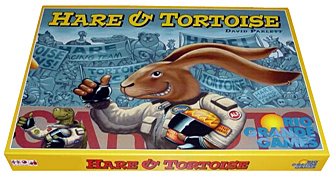 The first winner in 1979 was Hase und Igel (which literally translates to "Hare and Hedgehog" based on a German fairy tale but was released here by Rio Grande Games as Hare and Tortise) by David Parlett. This is an original race game with no random element. Players are bunnies. They spend carrots to move forward and gain them by moving backwards onto hedgehog spaces. Each bunny must eat three heads of lettuce and arrive home with no more than ten extra carrots. It sounds childish but this is a surprisingly tricky race game.
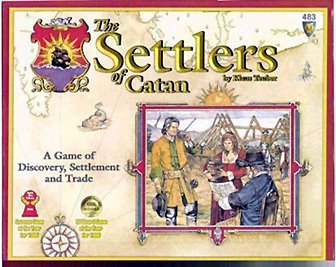
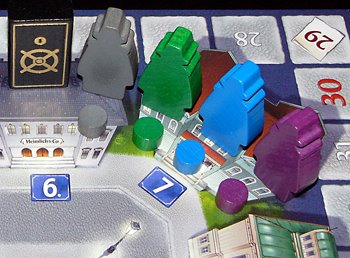 The 1986 SdJ winner was Heimlich & Co. by Wolfgang Kramer. Released in English by Rio Grande Games as Top Secret Spies, this is a game where the players are randomly assigned an identity that is known only to them. On their turn, players roll dice and may move agents of their choice. The agent tokens score based on location. However, about two-thirds of the way through, players will vote on the identities of the other players. Correct guesses are worth sizeable points, so players should mask their true identities for most of the game and observe others carefully if they want to win.There are lots of great winners worth mentioning from the 1990s, but I'll go with the game that brought the designer game from Germany to the US in a big way, 1995's winner, Die Siedler von Catan (The Settlers of Catan) by Klaus Teuber. This game has sold millions of copies worldwide and a decade later still holds plenty of appeal. Players are trying to have the most successful settlement on the island of Catan. By building houses, they may obtain the resources needed to build roads and more houses, and to upgrade their settlements to cities. What determines what areas will produce are numbers from 2 to 12 on each area and a pair of dice. Each player begins their turn by rolling the dice and what number is rolled produces for all players. Players may trade goods as they race to be the first to ten victory points. This is a great game with lots of interesting decisions and fun built in and a ton of replay value. Settlers of Catan is part of a series of Catan games published in English by Mayfair Games.
 These games should be available locally at a specialty game shop. Online, I'd suggest going to Google, click on Froogle and search for the game by name.Photo credits: Hare & Tortise ©2006 Mark Blanco, used with permission. Top Secret Spies ©2006 Robert Hawkins, used with permission. Settlers of Catan ©Mayfair Games.Ward Batty is a long-time game-player who has been with the same weekly game group for over twenty years. "I understood there was a pension." is his excuse. He writes a monthly column on the business of board games for Comics & Game Retailer magazine and has written articles and reviews for The Games Journal, Scrye, Knucklebones and Games International.
The Game Table is a weekly column which is self-syndicated by the author. If you would like to see this column in your local newspaper, please write the managing editor of the paper. Interested in carrying The Game Table in your paper, please contact Ward Batty.
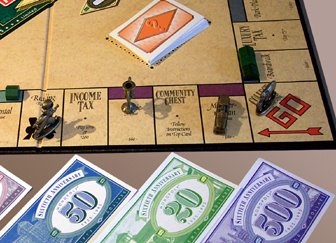 by Ward BattyMany love Monopoly but rarely manage to find the time to play it. As a cultural icon it is unmatched, but as a game it has problems that keeps it from being played as much as it might be, even by folks to love to play Monopoly. The drawbacks of Monopoly are that it is long, players are eliminated, and no amount of skill will overcome bad dice luck.There are several good articles online on how to get the most out of your next game of Monopoly. According to Mark Jackson's website Game Central Station, the first thing is to make sure you are playing by the correct rules, as many folks aren't, and don't realize it. Jackson says the five biggest rules folks break and don't realize are
- Players don't collect any money for landing on "Free Parking"
- When a player lands on an unowned property and chooses not to buy it, that property is then auctioned
- There are a limited number of houses and hotels in the game, when they are all built no more are available
- Loans are not allowed
- Only tangible items can be traded. No "future passes" are allowed, for example.
At Erik Anderson's very useful boardgame site at About.com, he passes on a number of variant rule suggestions to improve the game play.- Add movement cards to the game, alone or in combination with a die roll.
- End the game after the second bankruptcy.
- Add an auction to bid for turn order.
- Another fix for the turn order advantage would be for all players go once around the board before they can buy properties.
These and more suggestions can be found by searching for "Monopoly variant" on Google. I have, in the past, sped up the game by randomly dealing three properties to each player, which they pay for out of their $1,500. Another way to get in those extra games is to play it online, which speeds up the play by handling all the bookkeeping, if nothing else. Monopoly offers software for online play and you can get a free demo to try online. Games.com also offers online play. In the meantime, the next Monopoly World Championship is in 2007, so start practicing!In other Monopoly-related news, the Monopoly Here and Now Limited Edition, released in England, features a made-over London board with updated graphics and prices, which now soar into the millions of pounds.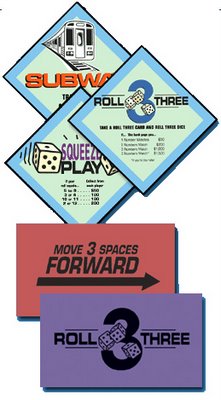 RAD Games has created what they call the Super Add-Ons Monopoly Version. This is not an official addition to the game from Parker Bros. The Add-On consists of a smaller board sized so it can be set on top of the Monopoly board, covering the area inside the property spaces that players move along. The board is another track that contains additional properties such as "Wall Street" and "Fisherman's Wharf" as well as two new utilities, "Gas Company" and "Wireless Phone Company."There are four corner spots. "Squeeze Play" lets you take money from other players. "Roll 3" allows all players the chance to collect extra money. "Pass" is like "Go" but pays $300 when passing and $350 if you land on it. "Subway" allows a player to move to any square on their next turn. Of note is the "Tax Refund" space that adapts, and improves upon the "Free Parking" variant that many play. Instead of collecting all the tax money, players collect half. This is a superior rule, as it guarantees there's always some money available and evens out that distribution. Players enter and exit the inset board via "Elevators" that are above two railroad spaces. They alter the movement pattern as even numbered rolls use the elevator to move from one board to the other while an odd roll continues down the current path, be it on the inside or outside. The game can also be played as a stand-alone game, without Monopoly. The Add-Ons concept is a clever one and RAD Games says they plan to continue with upcoming releases.Photo credits, Monopoly 60th Edition ©2006 Ward Batty. Super Add-Ons art ©RAD Games.Ward Batty is a long-time game-player who has been with the same weekly game group for over twenty years. "I understood there was a pension." is his excuse. He writes a monthly column on the business of board games for Comics & Game Retailer magazine and has written articles and reviews for The Games Journal, Scrye, Knucklebones and Games International.
The Game Table is a weekly column which is self-syndicated by the author. If you would like to see this column in your local newspaper, please write the managing editor of the paper. Interested in carrying The Game Table in your paper, please contact Ward Batty.
by Ward Batty
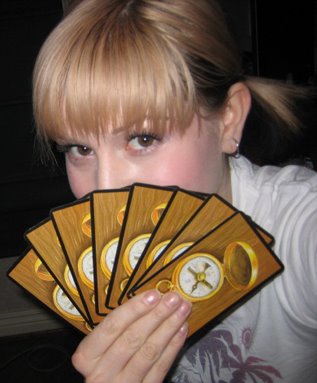 There are several reasons why two-player games are so appealing. First, you only need to round up one other person to play. Second, your chances of winning increases (in theory) to even. Most importantly, a two-player game is a more intimate experience, with the attention focused exclusively on your opponent's actions. This would seem to make playing such a game an ideal passtime for couples, but it can be hard to find a two-player game that works well. The classic two-player boardgames are, of course, chess, checkers and Go. Most of these are too confrontational and reward one type of thinking too much to be fun for both parties.
The good news for couples that enjoy games is that new games for two are being made available all the time. A nice feature of a number of these games is they are not as confrontational or as tactical as, for example, chess. Somebody will be better at the game, but there's enough of a luck factor so both players have a chance to win. So here are some recommendations of some two-player games that are especially good for couples. These are, of course, also well suited for any two players as well.
 First is Lost Cities by Reiner Knizia and published by Rio Grande Games. You might not think that a two-player game themed around jungle exploration would be a hit with the ladies, but it is. The core of the game play is something like competitive solitaire. All the players? melded cards are up, as are the top card in the discard stack for each suit, so there's lots of information available, and one crucial piece of information missing. In a favorite ploy of Mr. Knizia, which he utilizes in a number of his games including Lost Cities, players must play first and then draw a new card. Not knowing what that card will be really turns up the "game tension." The game unfolds with a bit more excitement and suspense than it would if players could draw the card before deciding what to play (the standard for most card games). You play through the deck only once, so the game lasts 15-30 minutes.
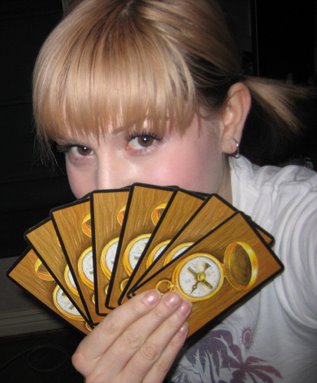
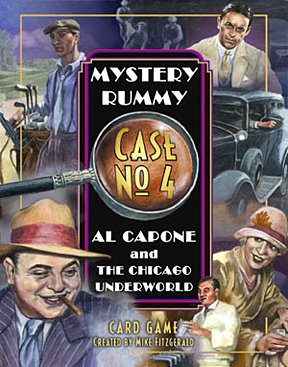
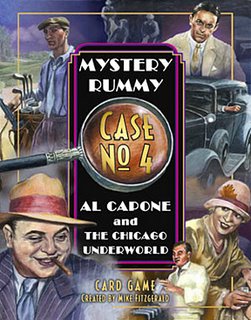
Another good game for couples is the Mystery Rummy series by Mike Fitzgerald and published by U.S. Games Systems. It might seem odd that a series of rummy games about Jack the Ripper, Jekyll and Hyde and the Murders in the Rue Morgue would have female appeal, but let's remember who watches CSI. In the case of Mystery Rummy: Jack the Ripper, players are trying to discover the true identity of the famous murderer. The game begins with a body and the scene of the crime. Evidence will accumulate in the form of melds, against one of the six suspects, but alibi and evidence cards can change the course of the investigation. Eventually, the Ripper is identified or escapes. Players score points for cards played. A game is played over several hands.
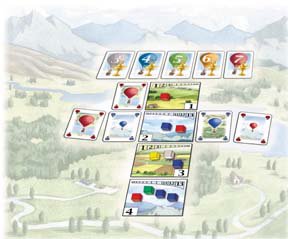
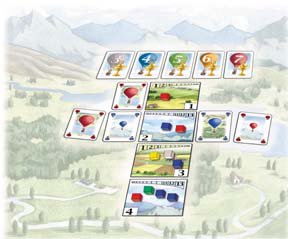 My final recommendation of a two-player game that's especially good for couples is Balloon Cup by Stephen Glenn and published by Rio Grande Games. This is an easy to learn game that has an appealing theme of air balloon races. Players play cards in an effort to win the colored cubed placed on each of five small boards. There are two twists that really "elevate" Balloon Cup (couldn't help myself). Depending on which side of each small board is face up, either the highest or lowest number combination of cards are needed to win, so both high and low cards are useful. The second twist is that players may play cards on their opponent's hand as well as their own. The first player to win enough colored cubes to claim three balloon cards is the winner.
These games should be available locally at a specialty game shop. Even if the shop doesn't have the game in stock, many are happy to special-order them. Your local store is a great place to learn more about these great games. Online, I'd suggest going to Google, click on Froogle and search for the game by name. For those in search of two player games that are more tactical and confrontational, I'll have some suggestions in a future column.
Photo credits. Lost Cities ©Betsy Ross, used with permission. Mystery Rummy ©U.S. Games Systems. Balloon Cup ©Rio Grande Games.
Ward Batty is a long-time game-player who has been with the same weekly game group for over twenty years. "I understood there was a pension." is his excuse. He writes a monthly column on the business of board games for Comics & Game Retailer magazine and has written articles and reviews for The Games Journal, Scrye, Knucklebones and Games International.
The Game Table is a weekly column which is self-syndicated by the author. If you would like to see this column in your local newspaper, please write the managing editor of the paper. Interested in carrying The Game Table in your paper, please contact Ward Batty.
 Welcome to The Game Table
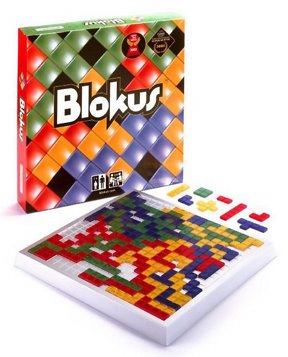
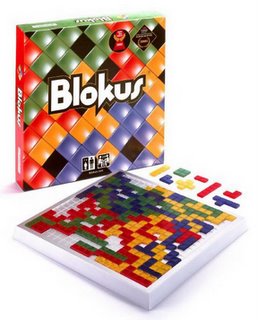
by Ward BattyAs unlikely as it may seem, during the ascendancy of the videogame, the humble boardgame has been experiencing a renaissance of its own. This may not be immediately apparent at the big box stores that carry boardgames, where Monopoly and Trivial Pursuit still reign. But there are hundreds of boardgame titles in print and dozens of new ones released each year for the specialty game store and online markets. And some are even making their way into such stores as Toys 'R' Us.These are called "designer games" because the game designer's name is featured, often prominently, on the box. Many of these games are co-published with European, mostly German, publishers. Several features distinguish these games: They are short, ranging from twenty to ninety minutes. Players are not generally eliminated from the game. There's also a sociability that is built into the games that increases the fun. Players compete against other players for victory points or to reach a goal. They rarely take directly from other players or send others backwards. There's lots of competition but much less conflict--which makes them a lot of fun to play.With this column I will have the honor of introducing many of these great games to a larger audience as well as cover some of the latest news and notes from the world of board and card games. I'll start off with two recommendations.Blokus, by Bernard Tavitian and published by Educational Insights, is easy to learn. It can be played at a high level of skill but is also fun for children as young as five. Blokus plays great for two to four players and is beautiful to look at. Players receive identical sets of pieces in their own color and with shapes that are familiar to any Tetris player. Pieces are laid starting in the player's corner and must touch their same-color pieces but only at the corners, no sides may touch. This rule applies only to each player's own pieces, so you can build next to opponents' pieces and squirt through at the corners. Not only is this a fun and challenging game that takes only about a half-hour, but also watching the board fill up into a colorful mosaic is also enjoyable.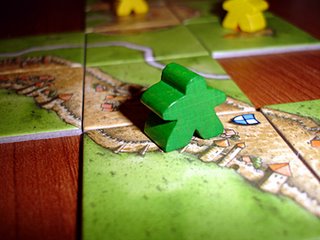 Carcassonne is a tile-laying game about building and populating the medieval city. The game begins with a single tile and through the course of the game tiles are added to create a complete game-board that is different every time. The turn is very simple, draw and play a tile. Any of four elements may be found on a tile. These are a green field, a road segment, a monastery or part of a walled city. Each player has seven "meeples" (miniature people) they place on a tile when they play it. The meeple is played on a specific element in that tile (on the road, for example) and scores when that element is completed. Players may not add a meeple directly to something that has a meeple. So one can't just add to someone else's road and hop on. Instead, one must build near what you want, then hope to draw a tile that makes the connection. Then both are in. Ties score equally for all players involved, so you want to get in on as many scoring opportunities as possible. But with only seven meeples to place, players must manage where they place so they can get some to score and become available to be placed again. The game generally takes about 45 minutes to play. Carcassonne scales great from two to five players and costs only about $20. Carcassonne is by Klaus-Jurgen Wrede and published by Rio Grande Games.To find these games locally, look for a specialty game shop. Even if they don't have the game in stock, they should be happy to order it. If you have a local store that carries the game, I'd suggest getting it there. With shipping the price won't be that much cheaper online and at the store you can look over some of the other great boardgames that are available and even get suggestions from the helpful folks there. Online, I'd suggest going to Google, click on Froogle and search for the game by name.
Photo credits. Blokus ©Educational Insights. Carcassonne ©Robert Hawkins. Used with permission.
Ward Batty is a long-time game-player who has been with the same weekly game group for over twenty years. "I understood there was a pension." is his excuse. He writes a monthly column on the business of board games for Comics & Game Retailer magazine and has written articles and reviews for The Games Journal, Scrye, Knucklebones and Games International.
The Game Table is a weekly column which is self-syndicated by the author. If you would like to see this column in your local newspaper, please write the managing editor of the paper. Interested in carrying The Game Table in your paper, please contact Ward Batty.
 Zertz is played on a board that is made of washer-like discs. They are arranged into a large hexagon shape. There are 5 white, 7 grey and 9 black marbles available for play. The rules are simple. On your turn, if you can capture a marble, you must. Just like in checkers, marbles can jump over another marble to capture; multiple marbles may be captured if possible, just like checkers. If you can't capture a marble, the turn consists of adding a marble and removing one of the discs that lie along the outside edge of the board. So the board changes as the game progresses. You can capture a group of marbles by removing the disc that isolates them from the rest of the board. The object is to capture 3 white, 4 grey or 5 black marbles, or 2 marbles of each color.
 Dvonn takes an old game mechanic and improves on it. This time the pieces are just flat discs, 23 black, 23 white and 3 that are colored like pepperoni. No one who has seen it has ever disagreed with this description. Players are moving pieces or stacks of pieces in an attempt to end up with stacks with their own color on top. The player whose piece is on top of the stack controls its movement. Stacks may be moved as many spaces as the number of pieces in that stack. Any time a group or stack of pieces become separated from one of the three pepperoni pieces they are removed from the game. The goal is to have control of the most pieces at the end of the game.
 Yinsh has a familiar goal, get five pieces of your color in a row. However, the manner in which this is accomplished is unique. Each turn, a player moves one of the rings they have on the board. Every time a marker is moved the player places a marker in the space the ring originated. These markers are white on one side and black on the other. If you pass the ring over other markers, they are flipped and so the marker color will change. If in doing this player gets five markers in a row of their color, they remove those markers and a ring. The goal is to be the first player to collect three rings. Of course, removing the rings limits the player's available choices, so the game gets trickier as it progresses. The relatively straightforward goal of Yinsh makes it the most accessible game in the series, in my opinion.